Structural Drying and Dehumidification in James Island, SC
When rain collects at high tide, water can linger long enough to leave framing and flooring wet. The drying team sets air movers and dehumidifiers and keeps adjusting them until the readings say dry.
(888) 532-8921Ask about a full drying plan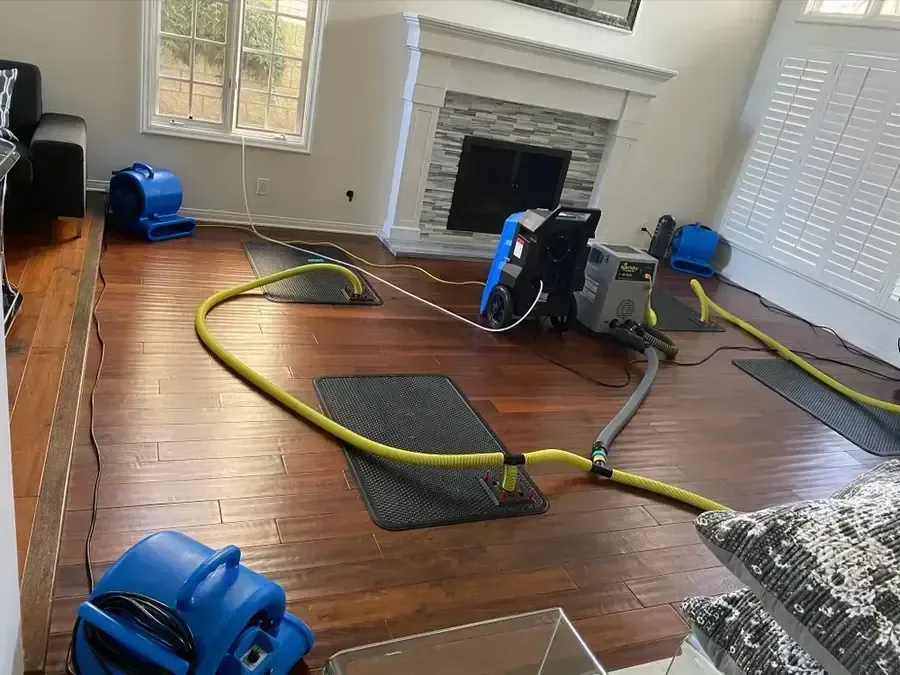
Structural drying is the stage that finishes a water loss. After the visible water is gone, wood, drywall and subfloors still hold moisture, and only controlled airflow and dehumidification bring them back to normal.
How structural drying and dehumidification is handled in James Island
Map
Meters show where the moisture sits.
Place
Air movers and dehumidifiers go in.
Monitor
Readings are taken every visit.
Finish
Equipment leaves when the numbers match.
What gets monitored
- Moisture in studs, plates and the subfloor
- Air temperature and humidity in each room
- Surface moisture on drywall and flooring
- A dry reference reading from an unaffected area
On every visit the drying team records the numbers and moves equipment as areas dry, so the machines run only where the water still is.
Why lingering water matters
The mayor has said water collects when it rains hard at high tide. Water that lingers soaks into framing and flooring where it cannot be seen. Wet wood and drywall can start to grow mold in a day or two, so the drying is planned around the slowest material in the house.
Water gone but the walls and floors still feel damp? Ask the crew to measure what is wet.
(888) 532-8921Request a moisture checkDense materials
Hardwood, thick subfloors and concrete dry slowly, and dense materials may need desiccant units on top of standard equipment. Water usually has to be removed first through water extraction, and concrete floors follow the steps for slab leak water damage. The main site describes structural drying and dehumidification more broadly.
First steps while the structural drying and dehumidification crew is on the way
Map the moisture
Meters set the wet boundaries and a dry reference.
Place the equipment
Air movers and dehumidifiers are sized to each room.
Check every visit
Readings are taken and equipment is moved or removed as areas dry.
Reach the standard
Equipment stays until each material matches the reading of the dry reference.
What does structural drying and dehumidification cost in James Island, SC?
Drying one area with light moisture often costs $1,000 to $2,500. Several rooms rise from there, and dense or saturated materials need more equipment and more days, which is what moves the job into the top range.
Class 1 or 2, one area
- Moisture mapping
- Air movers placed
- Daily readings
Several rooms
- More equipment
- Wall cavities dried
- Longer monitoring
Class 4 materials
- Desiccant drying
- Dense materials dried
- Extended run time
What moves the number
Ranges are typical, not a quote. The category of water, the square footage, the material class and how fast drying started move the total most. Try the water damage cost calculator for a closer range.
Structural drying and dehumidification across James Island and nearby communities
Drying visits cover homes across the town, including Stiles Point Plantation, Lynwood and Parrot Creek, and streets near Hollings Road, Fort Johnson Road and Harbor View Road. Call with the address to confirm.
The same service nearby: structural drying and dehumidification in Ladson, Mount Pleasant, Hollywood.
Water damage restoration in James Island · every town covered
Related water damage services in James Island
Structural Drying and Dehumidification questions, answered
Still dealing with it?
Water gone but the walls and floors still feel damp? Ask the crew to measure what is wet.
(888) 532-8921 Request a moisture checkHow do you know when a house is dry?
Readings in each material are compared with a dry reference from an unaffected area. The drying is finished when the numbers match, not when a set number of days has passed.
Why are the machines so loud?
Air movers and dehumidifiers run continuously to pull moisture from materials. The noise is a sign they are working, and they are shut off as areas reach the standard.
Can I run my air conditioner during drying?
Usually the crew asks that the air conditioner be set as directed, since the dehumidifiers manage the humidity. Follow the instructions given at the first visit.
Will drying shrink or warp my floors?
Controlled drying is gentler than leaving boards wet. Hardwood can still cup or buckle if it was soaked, and the crew checks it each visit and explains the options.
Does homeowners insurance cover drying?
Most policies pay for drying after a covered water loss. The daily readings and equipment logs the crew keeps show the adjuster why the work took the days it did.
Dry the structure to a measured reading
Water left in framing and flooring keeps damaging a house long after the surface looks fine. The drying team removes it and logs the numbers.
(888) 532-8921Plan the drying visit