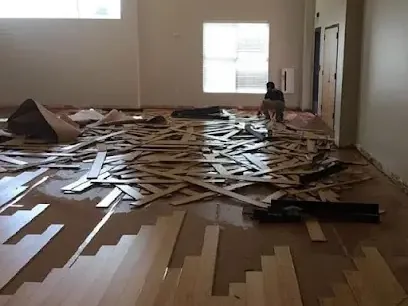
WCSC reported that Tea Farm homeowners in Ravenel saw Charleston Water System bills from the $200s to the $700s, up to $775, with tens of thousands of gallons recorded. A bill that high raises an obvious question: is water leaking inside the house?
Key takeaways
- WCSC reported Tea Farm water bills from the $200s to the $700s, up to $775, with tens of thousands of gallons recorded.
- Charleston Water System said its meters were working and it found no leaks, so a high bill by itself does not prove a leak.
- A meter check with every fixture off shows whether water is moving through the pipes.
- Hidden leaks show up in wall cavities, under floors and behind appliances.
- A plumber stops the leak, then the restoration crew removes the water and dries what was wet.
What the Tea Farm bill report says
Tea Farm is a new-construction home community in Ravenel built by Ashton Woods. The Town of Ravenel describes the Tea Farm Planned Development as about 396 acres.
In the WCSC report, Charleston Water System said its meters were working and it found no leaks. It also said the issue seemed to be between the developer and the residents.
Nothing in the report shows that these bills were caused by leaks inside homes. That is the point: a bill is a clue, and a leak is something that has to be found.
The report is useful because it separates the bill from the cause. A homeowner who sees a jump should check the house, check the meter and then ask the utility, in that order.
A bill is a clue, not a diagnosis
A high bill can come from irrigation on a new landscape, a toilet that runs, an appliance that never shuts off or a meter reading question. The first job is to sort those out before opening any walls.
New landscaping is a common reason for a spike. Irrigation on a new lot can run daily, and a broken head or a stuck valve can spill water for weeks without any sign inside the house.
- Compare the bill with earlier months.
- Check irrigation timers and outdoor spigots.
- Listen for a toilet that refills on its own.
- Ask the utility how the meter was read.
The meter test
A simple test shows whether water is moving when nothing should be using it. It takes only a few steps.
Many meters carry a low-flow indicator, often a small dial or triangle, that moves when even a trickle passes. A toilet that leaks into the bowl is a frequent cause of slow movement.
- Turn off every faucet, appliance and irrigation zone.
- Read the meter and note the dial or the low-flow indicator.
- Wait without using any water, then read it again.
- Movement on the meter points to a leak somewhere past it.
Where hidden leaks show up
A leak that moves water through the meter is not always visible. It can hide in places nobody looks at until a stain, a smell or a soft spot appears.
In walls and ceilings
A split supply pipe or a loose fitting inside a wall soaks the drywall from the inside. The first signs are bubbling paint, a warm spot or a faint hissing.
- Bubbling or peeling paint on a wall.
- A stain that spreads on a ceiling below a bathroom.
- Hissing or running water noise when everything is off.
Under floors
In a house with a slab floor, a pressure leak under the concrete can warm the floor or leave carpet damp. A slab leak needs the flooring lifted and the slab dried.
- A warm spot on a tile or hardwood floor.
- Carpet that feels damp with no spill.
- Baseboards that swell along one wall.
Appliances and supply hoses
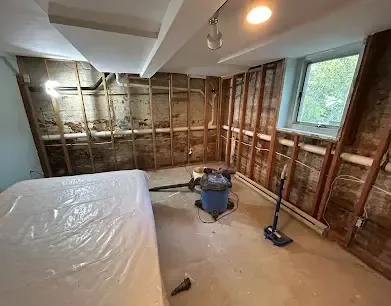
Washer hoses, dishwasher supply fittings, ice makers and toilet supplies fail more often than pipes in walls. They also leak out of sight, behind and under the appliance.
Appliance and supply hose leaks can soak cabinet bases and flooring before anyone sees water.
- Pull the washer out and inspect both hoses.
- Look under the kitchen sink for damp cabinet floors.
- Check behind the refrigerator for a wet ice maker hose.
- Replace rubber hoses that are cracked or bulging.
After the plumber stops the water
A plumber finds the leak and repairs the pipe. The restoration crew handles what the water already did.
If water has already soaked walls or floors, the crew maps the damage with moisture meters before cutting anything. That keeps openings small and shows which cavities still read wet.
That means removing standing water, opening wet walls or ceilings, drying the cavity and checking the readings. A burst pipe water damage job follows the same steps, whether the pipe split suddenly or leaked slowly.
Local residents can read more on the Ravenel service area page before deciding who to contact.
- Water is shut off at the main valve first.
- The plumber repairs the pipe.
- The crew extracts water and opens wet cavities.
- Drying runs until the framing and floors read dry.
Records worth keeping
Whether the cause turns out to be a leak or a billing question, a paper trail helps with the utility, the builder and the insurance company.
A written timeline is the strongest tool a household has. It shows when the bills changed, when the meter test was done and when a plumber was involved.
- Keep every bill and note the gallons used.
- Write down meter readings with the date.
- Photograph stains, damp spots and the meter.
- Save the plumber's findings in writing.
- Note the date any repair was made.
Questions
Does a high water bill always mean a leak?
No. In the Tea Farm report, Charleston Water System said its meters were working and it found no leaks. A bill can reflect irrigation, a running toilet, a billing question or a leak. The way to know is to test the meter, inspect the fixtures and, if needed, bring in a plumber.
How can a homeowner check for a hidden leak?
Turn off every fixture and appliance, read the water meter, wait without using water and read it again. If the meter moves, water is escaping somewhere past it.
Which leaks do the most damage before they are noticed?
Leaks inside walls, under floors and behind appliances, because they soak materials out of sight. A slow leak can run for a long time before a stain shows. A tiny leak can also keep a surface damp for a long time, which invites mold.
Who stops the leak and who dries the house?
A plumber finds and repairs the pipe. The restoration crew extracts the water, opens wet areas and dries the framing and floors.
Do Tea Farm homes have a known leak problem?
The report does not say so. It describes high bills and a utility finding of no leaks. This post uses it to show how a bill and a leak can be two different things. Many new homes run well for years, and a high bill is usually a question to investigate, not a conclusion.
What should be photographed for the utility or an insurer?
The water meter and its reading, any stains or damp spots, the appliances involved and the bills. Dated photos make the timeline clear.