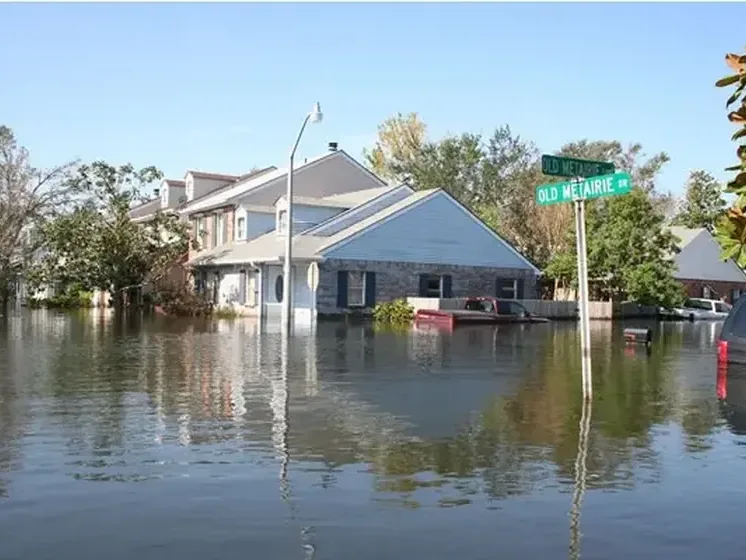
The Limehouse Branch canal runs through College Park Estates, and the Post and Courier reported in 2019 that it routinely floods after 2 to 3 inches of rain. When that water reaches a house, the first day decides how much of the structure can be saved.
Key takeaways
- Canal water that enters a house is treated as contaminated, so it is handled as Category 3 water and not as a clean spill.
- The Post and Courier reported that some College Park Estates homes had flooded five to nine times, so repeat flooding is a known pattern.
- Power to flooded rooms is switched off only from a dry spot, and nobody wades through standing water near outlets.
- Photographs of the waterline and the damaged contents are taken before anything is moved.
- Extraction comes first, then removal of porous materials, then controlled drying of the framing and floors.
Why Limehouse Branch matters to a house
The area is flat, with an elevation of about 39 feet and a high water table, so heavy rain has little room to drain away.
The Limehouse Branch canal passes through College Park Estates. The Post and Courier reported in 2019 that it routinely floods after 2 to 3 inches of rain, and that some homes had flooded five to nine times.
Live 5 News reported in September 2024 that the Trinity Road and Oxford Road bridges out of the neighborhood go under in heavy rain. A flooded house can be cut off from the road while the water is still rising.
The first steps inside a flooded house
The order matters. Safety comes before cleanup, and records come before moving anything.
Safety before anything else
Standing water and electricity do not mix. If water covers outlets or reaches the panel, stay out and leave the power alone until it is made safe.
Canal water carries soil, runoff and sometimes sewage, so boots and gloves matter.
- Switch off power to flooded rooms only from a dry spot.
- Keep children and pets out of the water.
- Never walk through wet rooms barefoot.
- Do not run a household vacuum on standing water.
Record the damage
Photographs of the waterline, the flooring and the damaged contents support an insurance claim later. Take them before anything is moved.
Write down when the water arrived and when it drained. That record matters most in a house that has flooded before.
- Photograph each room from the doorway.
- Mark the highest waterline on a wall with tape.
- Set small valuables on a dry shelf.
- Keep receipts for emergency purchases.
Protect what can be saved
Small steps taken early keep more belongings out of the waterline. Anything that can be lifted should go onto a dry surface, and rugs are best carried outside to drain.
Cabinet doors and drawers are opened where it is safe so air can reach the wet interior.
- Lift electronics, papers and keepsakes to a high shelf.
- Take up area rugs and hang them to drain outdoors.
- Open cabinet doors and drawers in wet rooms.
- Prop furniture on blocks to keep legs out of standing water.
Why canal water is treated as contaminated
Water that leaves a canal after heavy rain has crossed yards, streets and ditches on the way. It carries soil, fertilizer, oil and, at times, sewage from overwhelmed drains.
Restoration crews classify that as Category 3 water. The label changes the job, because anything porous that the water touched is usually removed instead of dried.
- Carpet and cushion are removed and discarded.
- Drywall is cut out above the highest wet point.
- Insulation inside wet wall cavities comes out.
- Particleboard cabinet bases and baseboards that soaked through are replaced.
What the extraction crew pulls first
The water extraction stage starts with the standing water. Truck-mounted and portable units pull it off the floor so it stops wicking into drywall and framing.
Speed matters because water keeps traveling into materials as long as it sits. Once the surface water is out, the crew checks what is still holding moisture.
- Standing water comes out before demolition starts.
- Wet vacuums reach low spots and corners.
- Furniture is lifted onto blocks or moved to a dry room.
- Contents that cannot be cleaned are set aside for the owner to decide.
Cleaning and drying after the water is out
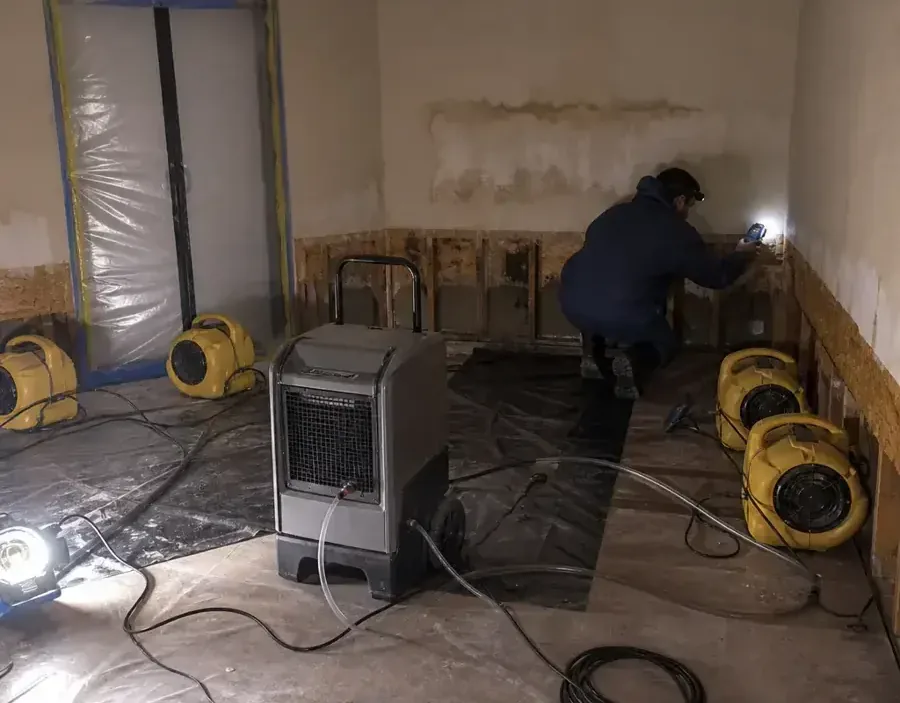
After extraction, the crew removes the porous material and cleans what remains with antimicrobial products. Hard surfaces are scrubbed, while the framing and subfloor stay in place to dry.
Controlled structural drying uses fans and dehumidifiers while the crew tracks moisture in the wall bottoms and subfloor. The work ends when the readings match a dry reference.
Rushing this step invites mold, which can start to grow in damp materials within a couple of days.
- Moisture readings are taken at the start and at each visit.
- Equipment is placed to move air across wet wall bottoms.
- Drying is complete when framing and subfloor read like dry reference material.
Getting ready for the next heavy rain
Because some homes have flooded five to nine times, a plan saves effort on the next event. A storm and flood readiness check lists what to move and what to shut off before water arrives.
Keep a folder with photos of the house in normal condition and the locations of the main water valve and the electrical panel. After a flood, storm and flash flood cleanup can start from the same records.
- Move vehicles, important papers and electronics early.
- Know where the main water and power shutoffs are.
- Photograph rooms before the storm season starts.
- Store keepsakes on upper shelves.
Repeat flooding and what changes in the repairs
In a house that has flooded several times, materials that went through earlier events may already be weakened. The crew checks the framing, the subfloor and the cabinets for old staining, so the repair does not rebuild over damage that was never fully dried.
Water-tolerant choices, such as tile on a lower floor and cement board behind it, can make the next event cost less. Those choices belong to the owner and the contractor doing the rebuild.
- Ask the repair contractor about water-resistant lower wall materials.
- Raise outlets and appliances where the rebuild allows it.
- Keep earlier photos and invoices together in one place.
- Check that the drying records show every wall cavity was measured.
Questions
Is canal floodwater safe to clean up with a mop?
No. It is treated as Category 3 water, which can carry bacteria and other contaminants, so porous materials are removed and hard surfaces need proper cleaning. A mop spreads the problem instead of solving it.
What if the roads are under water and nobody can reach the house?
Wait for safe conditions, stay out of moving water and photograph what can be seen from a safe spot. The Trinity Road and Oxford Road bridges go under in heavy rain, so road conditions affect when work can begin.
Can a house that has flooded several times be dried properly again?
Often yes, if the work removes what soaked and dries the framing to a dry reference. A history of flooding makes record keeping and monitored drying more important.
Why is a wall opened when it looks fine on the surface?
Insulation and drywall hold water inside the cavity. Opening the lower part lets the crew measure and dry the wet framing instead of sealing moisture in.
How long does canal flood cleanup take?
It depends on how many rooms were wet and how long the water stayed. Extraction and demolition come first, then drying runs until the readings match a dry reference, which is measured instead of guessed.
Should cleanup wait until the water goes down?
It should wait while water is still rising or moving, because that is unsafe. Once the water stops rising and the area is safe, extraction should begin, since wet materials keep absorbing.