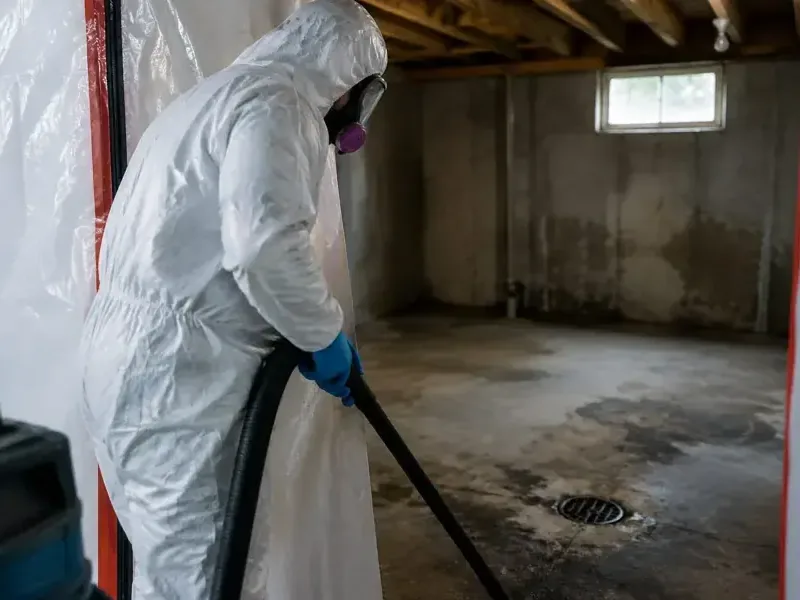
A backup through a toilet, tub or floor drain is one of the most unpleasant water damage events a household faces. In Goose Creek, Berkeley County Water and Sanitation handles sewer service issues such as slow drainage, backups and odors.
Key takeaways
- Sewage that backs up into a house is Category 3 water, so porous materials it touches are removed instead of dried.
- Berkeley County Water and Sanitation handles sewer issues such as slow drainage, backups and odors, and it investigated a Goose Creek townhome backup.
- A November 2021 report traced that backup to rebar driven through the sewer pipe in January 2017, when the home was built.
- Berkeley County's Red Bank Road Gravity Sewer Project used pipe bursting to add sewer capacity and prevent overflows.
- Stop using water in the house, keep people out of the affected rooms and photograph the damage before cleanup starts.
What a backup means for a house
Sewage returns through the lowest opening in the plumbing, which is usually a tub, a shower drain or a ground-floor toilet.
The water carries bacteria and viruses, so it is classed as Category 3 whatever it looks like.
Backups can follow heavy use, a blockage farther along or damage in the pipe itself. The cause is not always visible from inside the house, which is why the utility and a plumber both matter.
Because sewage is not clean water at any stage, even a shallow backup on a bathroom floor counts as a full contamination event.
- Several drains gurgle or run slowly at the same time.
- A toilet flush makes water rise in a tub or shower.
- A sewage odor appears with no visible source.
- Water rises around a floor drain.
Who looks at the sewer pipe
The first question is which utility serves the home, and the finding decides where to report the problem.
The county sewer utility
Berkeley County Water and Sanitation handles sewer service issues such as slow drainage, backups and odors. Not every address is necessarily on county sewer, so the utility serving the home is worth confirming.
The City of Goose Creek Public Works Water Division delivers drinking water and fire suppression, which is a separate service.
The house side
A plumber with a camera can show whether the blockage sits inside the house or farther along. Where responsibility lies is a question for the utility and the plumber, and cleanup should not wait for that finding.
A plumber can also check the cleanout, the short access pipe that lets a drain be opened and cleared. A cleanout that holds standing water points to a blockage farther along the pipe.
A townhome backup that traced to a building defect
In November 2021 reporting, a Goose Creek townhome sewage backup left a homeowner with a $7,500 bill.
Berkeley County said the problem traced to rebar driven through the sewer pipe in January 2017, when the home was built.
The case shows that a backup is not always a clog or something flushed by mistake.
Utilities and builders each have records the homeowner does not, such as inspection notes and pipe locations. Asking for them early can shorten the search for the cause.
- Photograph the cleanout and any visible pipe.
- Ask the utility to investigate before repairs cover the evidence.
- Keep every invoice for the cleanup and the plumbing work.
- Tell the property manager or the builder if the home is newly built or leased.
The Red Bank Road sewer work
Berkeley County's Red Bank Road Gravity Sewer Project began in spring 2022 to increase sewer capacity and prevent sewer overflows. It used a pipe-bursting method and was nearing completion in early 2025.
Pipe bursting is a trenchless method, which means the old pipe is broken apart while a new one is pulled into its place.
The Berkeley County Water and Sewer impact fee program funded the work.
Capacity work like this is aimed at the system as a whole, so a household still needs a plan for what to do if its own drains back up.
What Category 3 cleanup removes
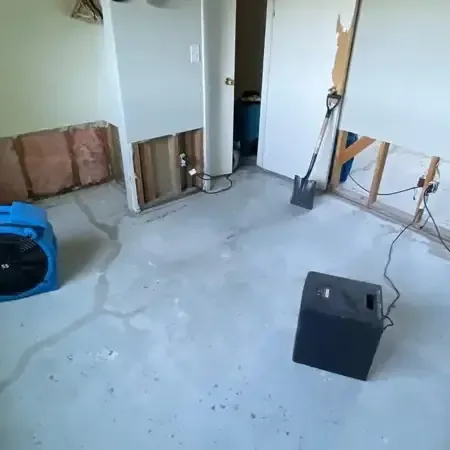
In a sewage backup cleanup, carpet and cushion, wet drywall, insulation and soft cabinet bases that touched sewage are cut out and bagged. Hard surfaces are cleaned and disinfected.
After removal, wet framing and subfloor go through structural drying until the readings match a dry reference.
Speed matters because sewage soaks into drywall and subfloor quickly, and the odor and contamination travel with it. Early removal limits how much material has to go.
- Porous finishes are cut out and discarded.
- Hard surfaces are washed and disinfected.
- Air is moved through the room while drying runs.
- The area stays closed to children and pets until cleanup is done.
Keeping records for the utility, the plumber and the insurer
Good records help with the utility, the plumber and the insurance company, whichever of them ends up responsible for the repair.
Dated photos, a short log of what happened and when, and every invoice make a backup easier to explain.
- Write down the date and time the backup was first noticed.
- Photograph the affected drains, floors and walls before cleanup.
- Save plumber reports and any camera footage of the pipe.
- Ask the utility for a written note of what it found.
First steps at home
Stop using water in the house. Flushing, laundry and the dishwasher all push more waste toward the lowest drain.
Residents who want to see how local jobs are handled can read about water damage restoration in Goose Creek, then arrange cleanup while the utility and a plumber look at the pipe.
Sewage carries organisms that cause stomach illness and skin infections. Anyone entering the area needs boots, gloves and eye protection, and hands are washed carefully afterward.
Children, older adults and anyone with a weak immune system stay out until cleanup is finished.
- Keep people and pets out of the wet rooms.
- Wear boots and gloves if anything must be moved.
- Photograph the drains, the floor and the damaged items.
- Keep towels and fans away from contaminated areas, because they spread waste.
- Rubber boots and waterproof gloves.
- Eye protection and a mask.
- Soap and clean water for hands and forearms.
- Contaminated clothing washed separately in hot water.
Questions
Is a sewage backup the same as a clogged toilet?
No. A clogged toilet overflows clean fixture water and a little waste. A backup pushes sewage up from the pipe through the lowest drain, which makes it Category 3 water that needs full cleanup.
Can household bleach clean up sewage on carpet?
No. Carpet and cushion that touched sewage are removed and discarded. Disinfectant can treat hard surfaces, but it cannot make porous material safe again.
Who should be told about a backup?
The utility that serves the home, a plumber and the insurance company are all worth contacting. A landlord or property manager should also be told if the home is rented.
Does drying alone fix a sewage backup?
No. Drying handles moisture in framing and subfloor after the contaminated materials are removed and the surfaces are cleaned. Skipping the removal leaves the contamination behind.
Does a backup always come from the street sewer?
No. A blockage inside the house plumbing can also push water out of the lowest drain. A plumber with a camera can show which side of the property the problem sits on.
Can furniture be saved after a sewage backup?
Hard furniture can usually be cleaned and disinfected. Upholstery and anything porous that sat in sewage is generally discarded.